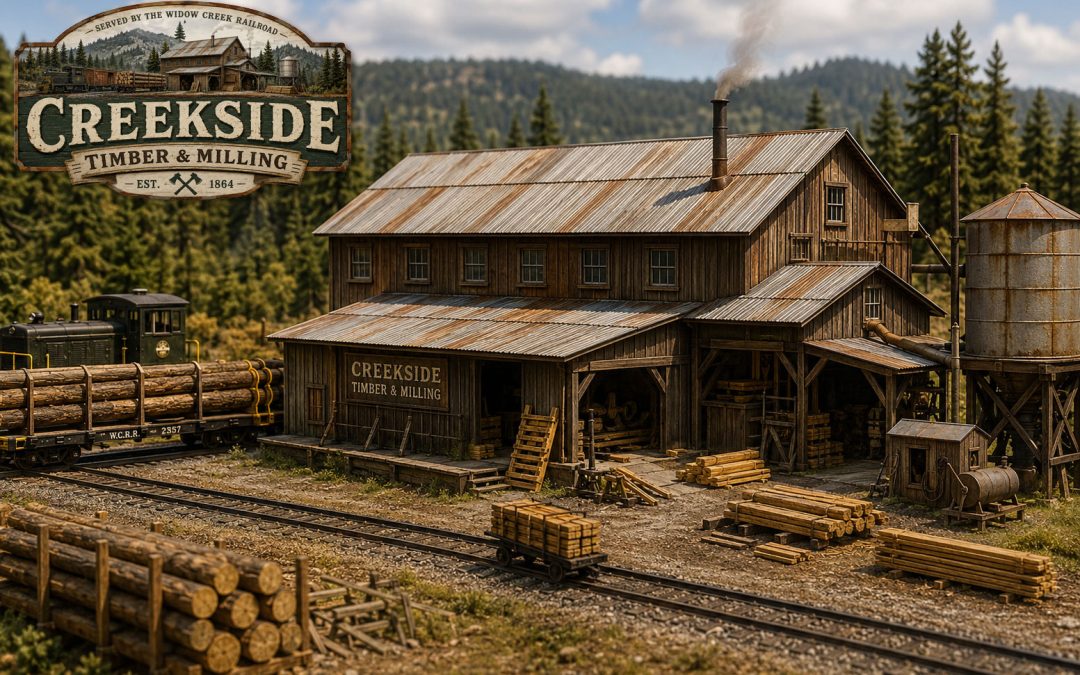
A T-Trak switching puzzle built for a full day’s work at the mill.
There are places in the mountains where the railroad seems to have arrived for one reason and simply never left. Creekside is one of those places.
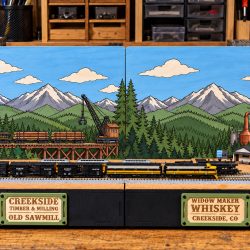
By the early 1960s, Creekside Timber & Milling has been cutting timber long enough for the buildings to show their age and the railroad to look as though it grew along with the mill. Tracks wander around lumber sheds and stacks of timber rather than following any particularly elegant plan. Dirt roads cross wherever they need to, machinery sits where somebody last used it, and the surrounding woods are never very far away.
Most mornings begin with the sound of machinery from the mill and a switcher moving cars around the property. Loaded log cars arrive from the woods. Finished lumber waits to leave in boxcars and flats. Tank cars and the occasional colorful old reefer find their way into the mix. Nothing moves very far at Creekside, but nearly everything eventually has to move out of somebody else’s way.
This is the kind of railroad I’ve wanted to build.
Bringing Creekside to the Widow Creek
 Creekside Timber & Milling is becoming the newest industry served by the Widow Creek Railroad, built around a five foot N scale switching layout that can stand completely on its own or become part of a larger T-Trak railroad.
The first five feet contain the heart of the mill and the complete switching puzzle. Two additional modules are planned for later, extending Creekside in both directions and giving the scenery more room to tell the story.
One of those future sections may become my favorite part of the entire project. I’m building it on a depressed module so the scenery can actually fall below track level. That gives Creekside its creek and a proper log pond. Trains will back loaded log cars onto the tracks above the water, where the logs can be unloaded into the pond before making their way toward the mill. A small dock, an operator’s shack, old machinery and plenty of timber should make that end of Creekside feel much larger than it really is.
The other extension will give me room for another small industry or railroad customer. I haven’t decided exactly what belongs there yet. Creekside can tell me that as it grows.
Building a Small Railroad to Work
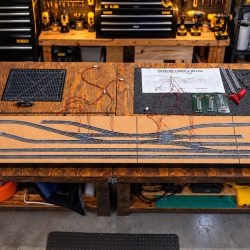
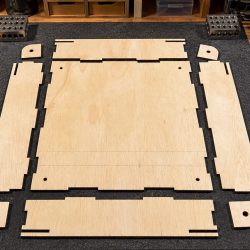
The modules themselves are being built in my shop from laser cut plywood. They follow T-Trak standards where they need to, including the two main tracks running across the front, but the industrial railroad behind those mains is very much its own little world.
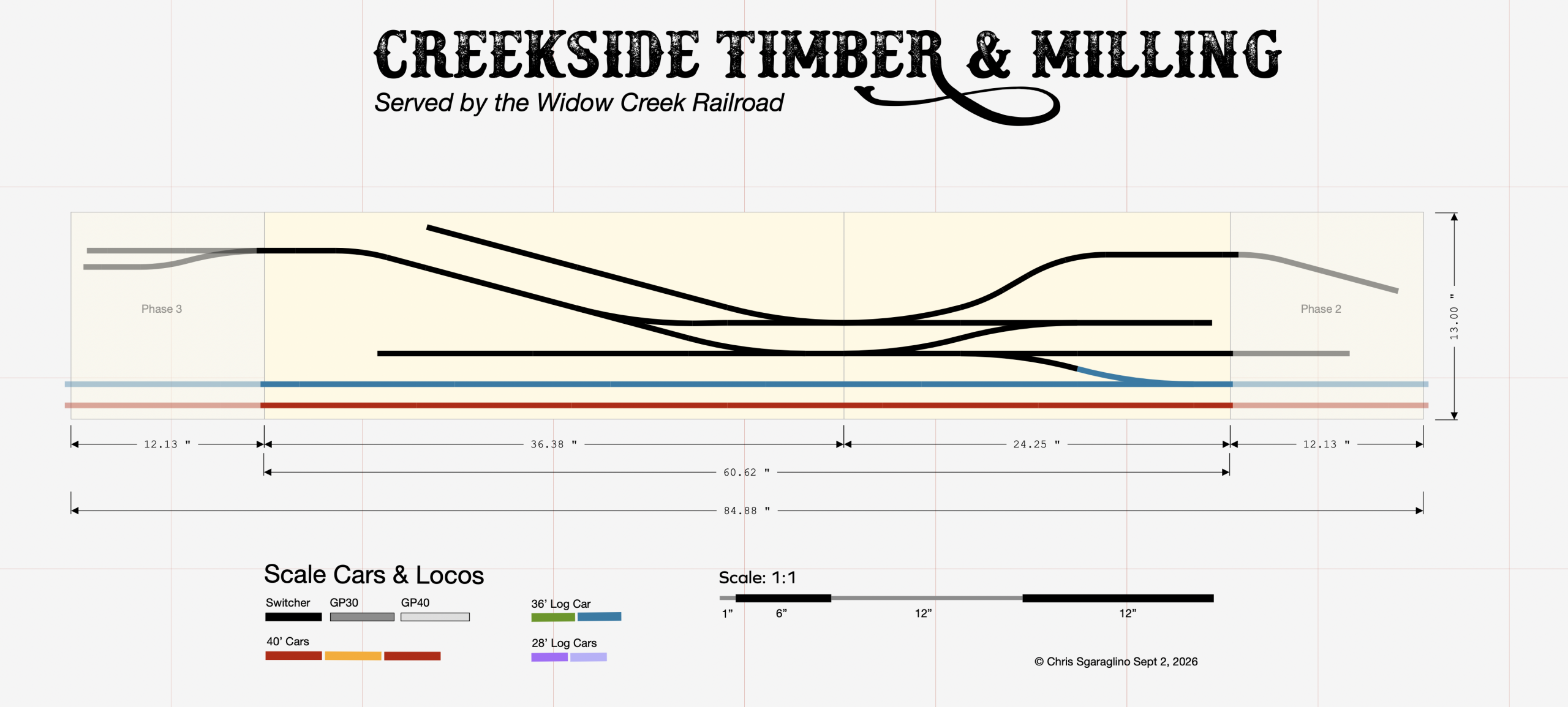
That distinction continues underneath the scenery. Creekside’s switching trackage is electrically isolated so the railroad can operate independently with my NCE system at home while still being able to join a larger T-Trak setup using Digitrax. The design keeps those two DCC environments separated rather than risking one system being connected to the other.
There will also be a fair amount of electronics hidden beneath what should eventually look like a rather low tech 1960s lumber operation. Arduino based controls will handle the turnouts and indication, with room to add animation, sound and other activity around the mill as the project develops.
The trick will be making all of that technology disappear.
From the aisle, I don’t want Creekside to look electronic. I want it to look like wood, dirt, water, rust, weeds and machinery that probably should have been replaced ten years ago.
Eight Cars and an Afternoon’s Work
Creekside is deliberately being built around short equipment. Thirty six foot log cars and forty foot freight cars fit the scene and, more importantly, make the switching work. Small switchers and early GPs will handle most of the assignments, although the calendar around Creekside is loose enough that an old steam locomotive isn’t necessarily out of the question.
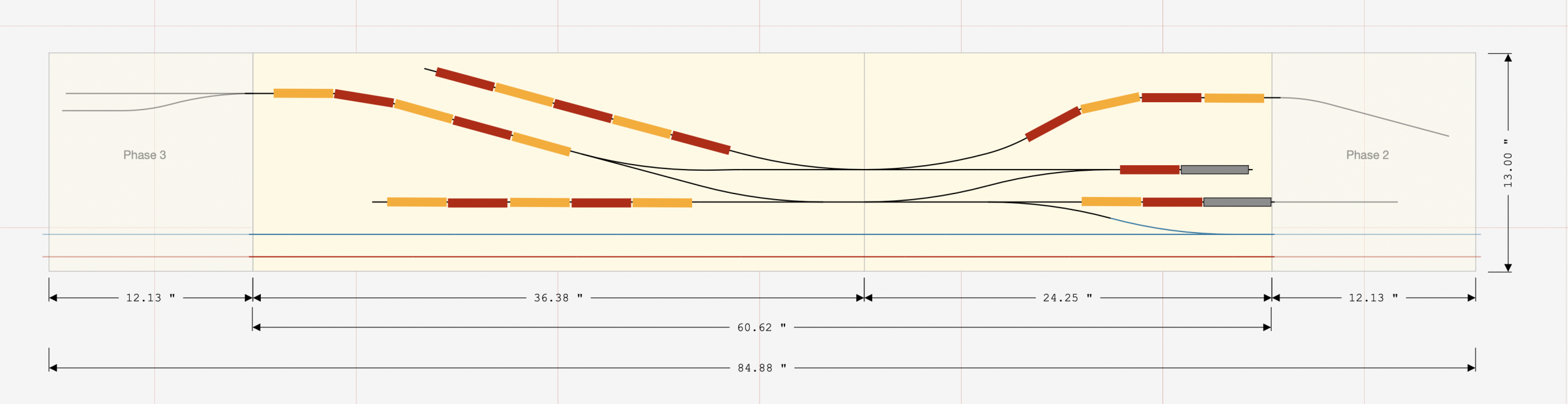
The switching puzzle itself only needs eight cars, and there is no special Creekside roster required to play it. In fact, I want the cars to be noticeably different.
I have some wonderful older refrigerator cars with big advertising graphics, along with tank cars, stock cars and boxcars that are easy to distinguish from one another. That’s much more interesting to me than leaning over the railroad trying to read tiny reporting numbers. If the job calls for the beer reefer, the black tank car and the red boxcar, you know exactly which three cars you’re after. The challenge is figuring out how to get them where they belong.
That becomes even more interesting when Creekside joins a club layout. Another operator can arrive with eight cars from their own train, leave them with the Creekside crew and suddenly those become the day’s switching puzzle. Work the cars through the mill, get everything sorted correctly, gather them back together and they’re ready to be picked up and continue down the railroad.
That’s really what Creekside is about.
It isn’t intended to be a lot of railroad squeezed into five feet. It’s a small place where the railroad has a reason to be there. When the scenery starts going down, I want the tracks to disappear into the mill, the lumber stacks, the pond and the trees until it becomes difficult to tell whether the railroad came first or Creekside did.

And somewhere around 1960, with a switcher idling beside the lumber shed and another cut of cars waiting to be sorted, I think Creekside Timber & Milling will feel right at home on the Widow Creek Railroad.

Very inspirational, Chris! I love the track plan, and I can see how I can incorporate much of it into the layout I am in the process of building; specifically, it can with a little modification fit to what I envision my Glendale, Oregon lumber area to be. Thanks for sharing!